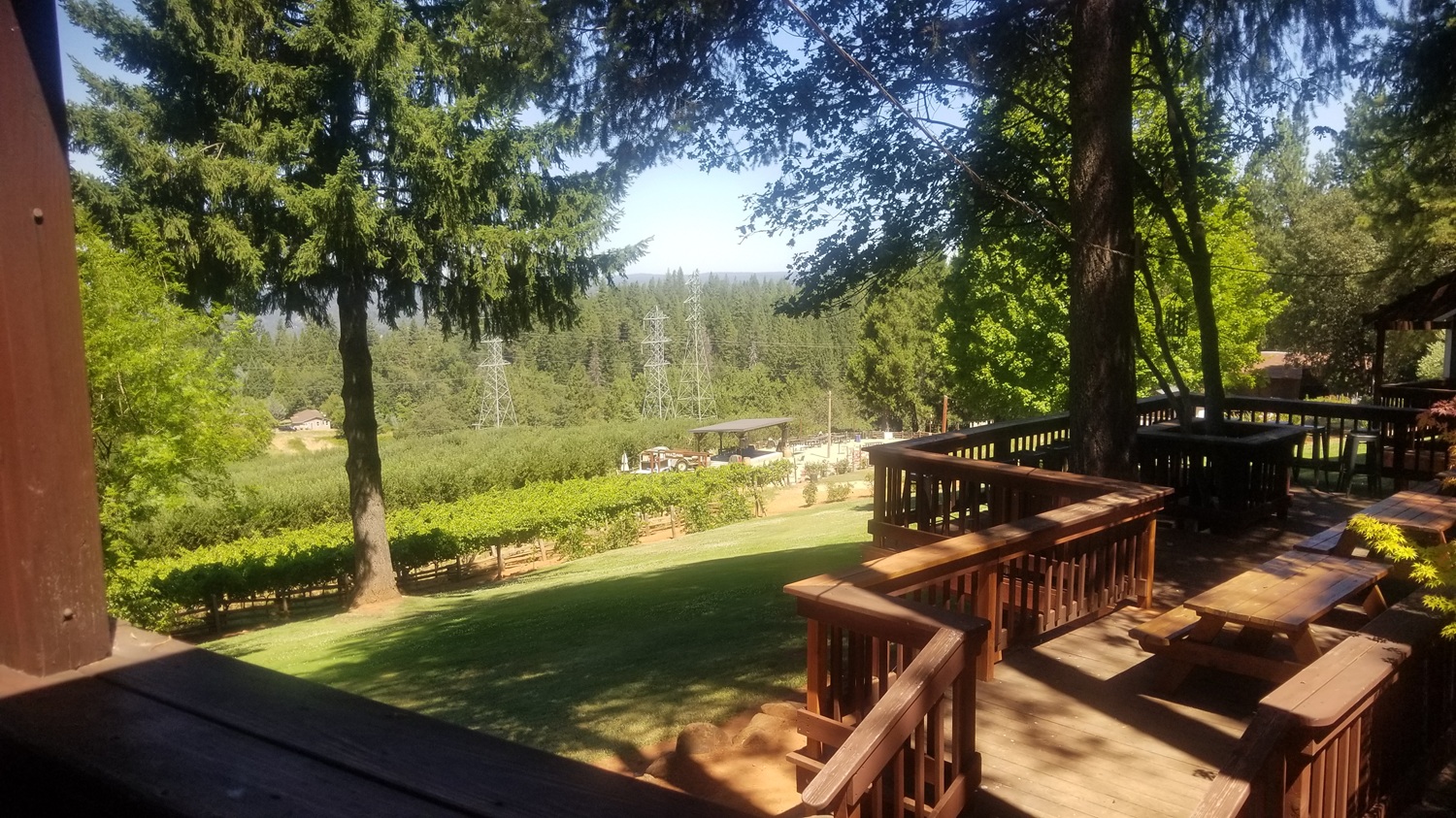

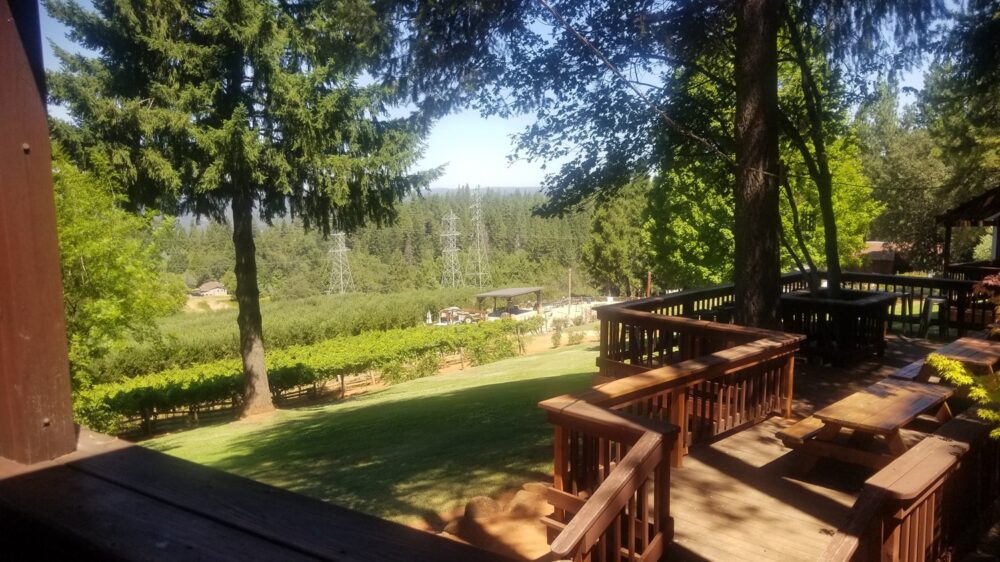
Hotel rooms that start at $89.00 a night. Quail crossing signs along fragrant mountain roads. Hillsides punctuated by year-round farms and rolling vineyards. Family-friendly small towns with a vibrant local culture. An affordable food and wine scene. Down-to-earth winemakers making wines of character and terroir.
El Dorado AVA is one of the most approachable and fun winegrowing regions to explore in California. The casual nature of this region belies the sophistication of its wines. Experimental, innovative, and tenacious, the wine culture of this small, mountainous appellation is rich and meaningful. This winegrowing region is one for the times where wine lovers can afford to explore the object of their interest and bring the family along for a memorable adventure. As an aside, El Dorado AVA is often casually referred to as Apple Hill by the locals, a nod to the area’s ample family-owned apple farms.
My recent visit to El Dorado AVA began in the small town of Camino (elevation 3,300 feet) located about halfway between Sacramento and South Lake Tahoe. Checking into the Extraordinary Camino Hotel (about $137.00 a night) was like time-traveling back to the days of the Gold Rush. Built in 1888, this charming small hotel is ideally located near a handful of great wineries and popular apple farms. The Forester Pub and Grill, a pretty good German restaurant, is right across the street. There’s a well-stocked little grocery store next door to the Forester and a coffee shop a few doors down called The Oak House that serves surprisingly great coffee. There isn’t much else to Camino, but that’s what makes it so ideal. There are more trees than people in this quiet, relaxing town.
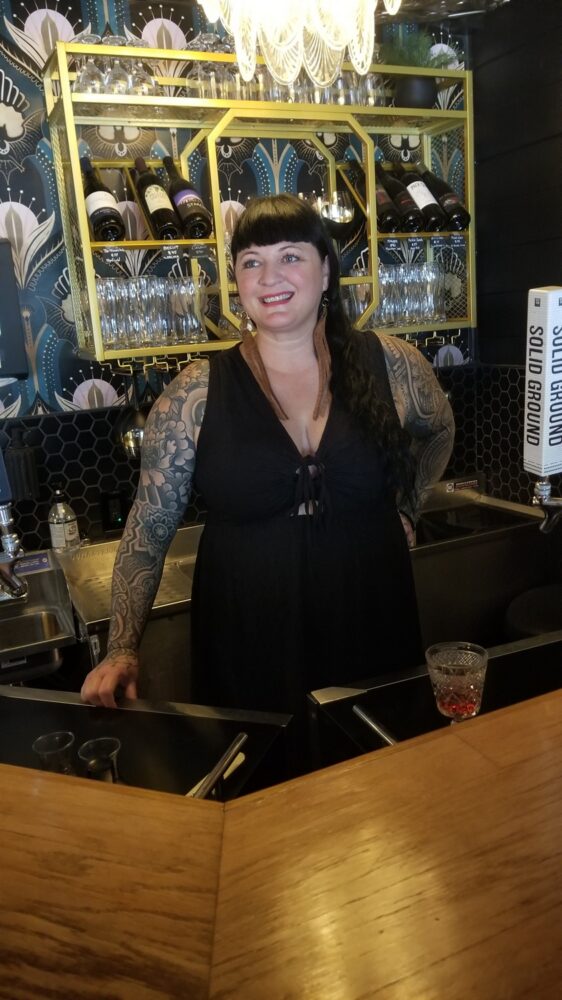
Raven Starr, owner of the Extraordinary Camino Hotel
The Extraordinary Camino Hotel is an Adults Only (21 years old and over) property, due to their old-timey, well-stocked drinking parlor, which invites guests to sit at the bar and drink or to take their beverage upstairs to their room. Owner Raven Starr can be found in the drinking parlor most days, pouring a great selection of wines, ciders, and beers. I posted up at the bar and chatted with a returning guest who’d taken to the hotel’s singular aesthetic and friendly owner. He and Raven chatted while I absorbed the mysterious, soulful vibe of this little hotel. The rooms are thematic, comfortable, and clean. Other area hotels and motels are also affordable, with an average nightly rate of between $89.00 and $150.00.
After dropping off my bags, I headed over to Starfield Vineyards (elevation 2,400 feet), a few minutes away, to meet up with owners Tom Sinton and his son Rob. Rob assumed winemaking duties from his dad in 2022. Over warm, freshly baked Roman pinsas (fluffy, flavorful flatbreads made on the spot in the winery’s pizza oven) and glasses of Starfield’s balanced, fresh wines, Rob talked about the region’s terroir, commonly referred to as Sierra Spice.
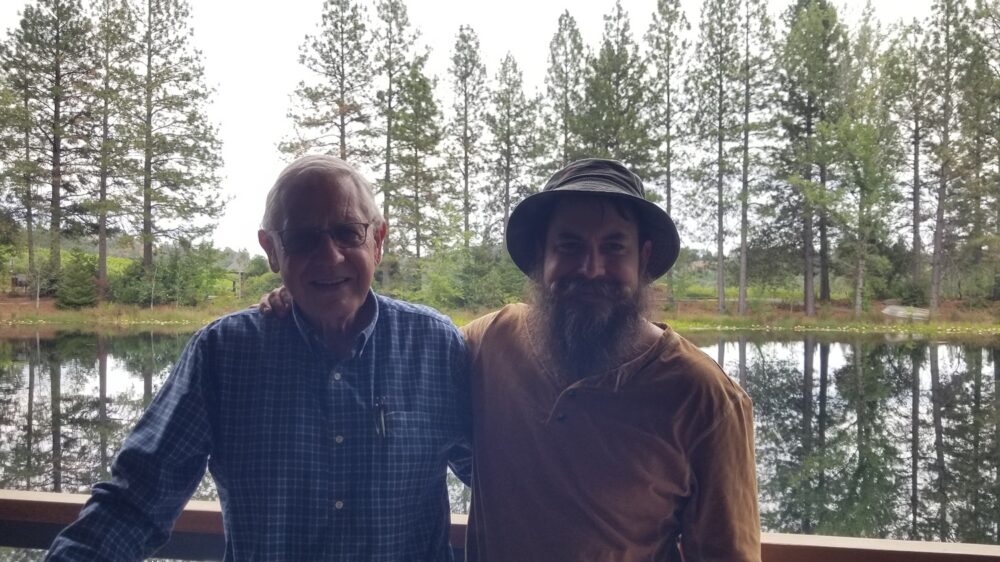
Tom and Rob Sinton of Starfield Vineyards
Earlier in the day, he’d harvested small bundles of Ponderosa Pine, Incense Cedar, and Douglas Fir and placed them individually in three tall glass jars which he’d kept refrigerated and sealed until I arrived. The fourth jar held sprigs from all three trees and was labeled Sierra Spice. As he opened each jar for me to smell, an effluence of dark alpine forest permeated the air around our table. Rob believes that Sierra Spice – a blend of these coniferous fragrances – is the overarching identifying characteristic of the local terroir.
And, indeed, over the next few days, I was able to identify Sierra Spice in most of the wines I experienced there, from whites to reds. It’s a tart, sharp, inviting aromatic evident not only in the profile of the region’s wines, but in the air one smells driving the appellation’s circuitous mountain roads. Even traipsing through vineyards, the Sierra Spice profile announces itself in passing breezes. It’s one of the most recognizable terroirs that I’ve personally experienced. The needles of the Ponderosa Pine are reminiscent of tarragon, basil, rosemary, dill, parsley, hops, and lemon. The Douglas Fir has a muskier profile, with pepper, rose, and lavender evident. Incense Cedar is woodsy and citrusy, with hints of cloves, oregano, and pencil shavings. Taken together, Sierra Spice imparts a dynamic identity to the wines of this region.
After our tasting, I hopped into a golf cart with Tom and Rob, and we headed out to tour their estate. We drove through a 300-foot-long arbor covered in fragrant roses, then wound our way out to their lake, a placid, peaceful place. In addition to visiting the various blocks within their 67 acres of vineyards, we also traveled along the three miles of nature trails they maintain for guests to explore. The trails are dog-friendly. The estate has hundreds of azalea shrubs, maples, scarlet oaks, and over 10,000 flowers.
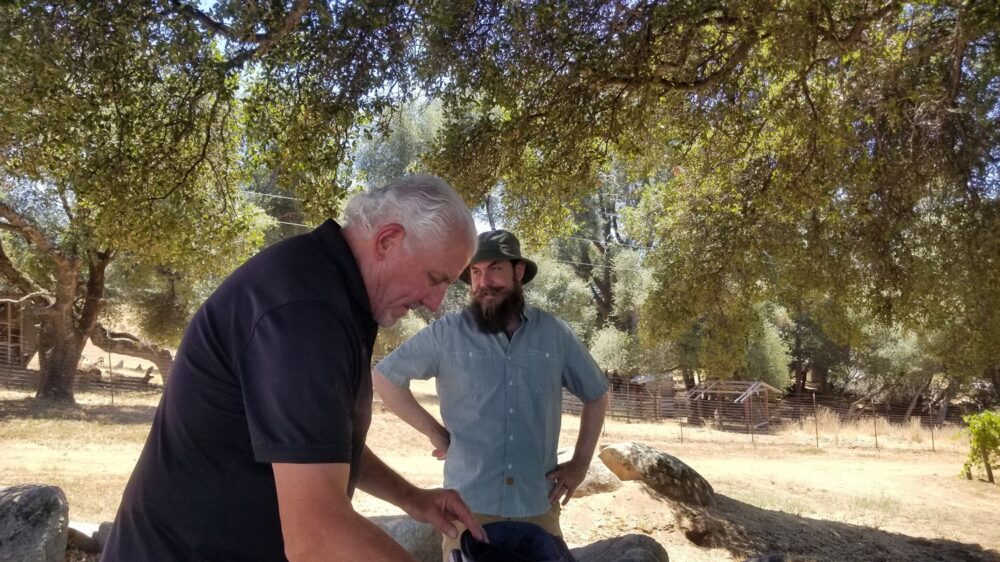
Lee Heinsen of Element 79 and Rob Sinton of Starfield Vineyards
The next morning, I made my way up to Element 79 Vineyards (elevation 2,400 feet), a short drive away. The estate vineyards of Element 79 back up against a deep alpine forest. Owner Les Heinsen was setting up when I arrived, along with Rob Sinton from Starfield Vineyards and winemaker Paul Bush from nearby Madrona Vineyards. They gather regularly to explore Sierra Spice a bit further and to offer each other professional feedback and insights into their wines. There was a casual, jocular air about them that immediately put me at ease.
After we chatted for a bit, Heinsen poured his 2024 Element 79 Viognier for us at a spot in their tasting room overlooking their estate vineyard. I’m a bit hard on Viogniers because I often find them too viscous and ponderous for my personal palate, but this one was lean, angular, and finessed. Heinsen told me that over-ripeness can obliterate Sierra Spice, a profile he likes accentuated in the Element 79 wines. In addition to Douglas Fir, Ponderosa Pine, and Incense Cedar, Heinsen adds that Bear Clover – or Mountain Misery, as it’s called by the locals – also adds to the region’s terroir. Moutain Misery is an aromatic evergreen shrub in the rose family that gives off a sharp tarragon and rosemary fragrance. Later in the day, Heinsen took me on a drive up to the ridgeline overlooking the Element 79 estate. On the way to the top of their property, we drove along narrow, dusty mountain trails lined with Mountain Misery, and, indeed, I was reminded of this estate’s heady, lifted Viognier.
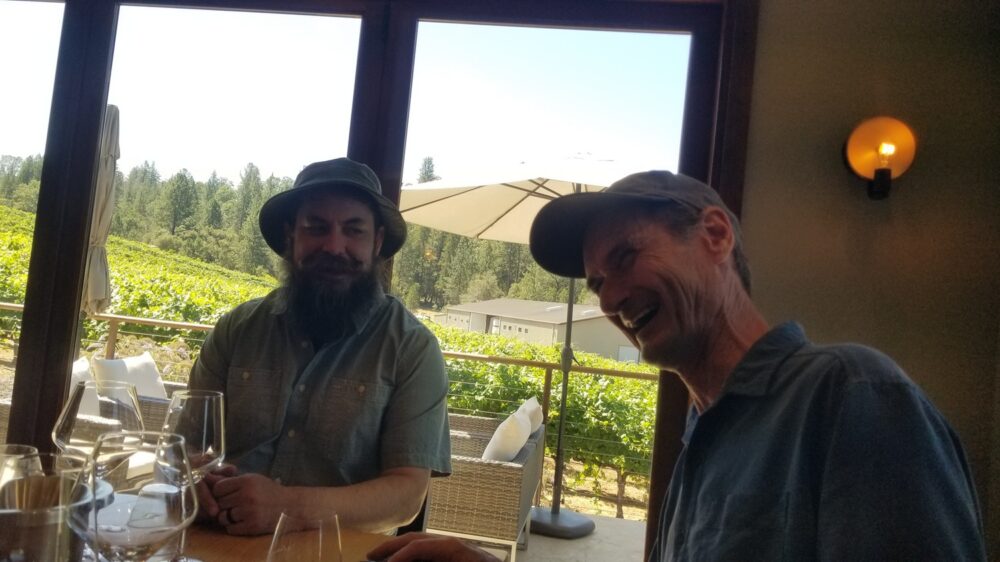
Rob Sinton of Starfield and Paul Bush of Madrona at Element 79
Winemaker Paul Bush of Madrona Vineyards is known for his elegant, tension-filled, high elevation Rieslings. The 2024 Madrona Vineyards Hillside Riesling, which he poured for us, is an astounding steal at $20.00 a bottle. It’s nervy and lean, with a distant suggestion of petrol, accompanied by a hallmark Incense Cedar aromatic. For a few dollars more, the 2024 Madrona Vineyard Signature Riesling is another steal, clocking in at $26.00 a bottle, with a steely, minerally vibe that’s tamed and rounded out by a citrusy Douglas Fir aroma. Though he’s mostly known for his exceptional Rieslings, Bush also makes refined red wines. He’s got a light touch and seems to handle extraction in a measured way. The 2022 Madrona Vineyards Hillside Merlot he poured that day is a keeper. It’s got tremendous structure and tension, but also offers up pretty, delicate black cherry notes. I loved the freshness of this wine and the woodsy, musky aromatics that shone through. Sinton brought his 2023 Starfield Mourvedre, a variety that seems to thrive at high elevations. An iodine, feral beauty, it over-performs at $42.00 a bottle.
Next up, I made my way to Edio Vineyards and Delfino Farms. This lively property encapsulates the best aspects of the El Dorado AVA. It’s a fertile region that grows fruits and vegetables year-round. Delfino Farms and Edio Vineyards are owned by the multi-generational Delfino family. Family members are involved in all aspects of this quinta-like business. Brothers Peter. Derek and Ben farm and make the Edio Wines, while Christine, their sister, handles marketing and business administration for the winery. The siblings’ significant others are also involved in daily operations, as are their cousins. In addition to a line up of well-made, balanced Rhône wines showcasing great natural acidity, the family is also highly regarded for their Joan’s Bakery, which draws visitors from all over California seeking out its apple pies, offered seasonally since 1972. Hard cider fans will want to check out the family’s Henrietta Stich Hard Apple Cider. It’s bone dry and invigorating. They’re also known for their outdoor concert series, attracting talent from around the country. Edio Vineyards and Delfino Farms is an especially great place to check out if you’re traveling with family, as kids will enjoy visiting the farm animals on the way to a family-friendly hiking trail that runs parallel to the estate vineyards.
On my third day there, I meandered down to Placerville, a town larger than Camino that’s centrally located in El Dorado AVA. Placerville is quirkier than most mountain towns I’ve visited. Sure, they’ve got the dive bars and the requisite ammo shop, but Placerville also has a wiccan shop, a marijuana dispensary, and a lineup of great restaurants, from fine dining establishments like The Independent and Burning Barrel to family-friendly staples like The Original Mel’s Diner and the Buttercup Pantry. There are antique shops, galleries, clothing stores, gift shops, a couple of history museums, and the Placerville Hardware store, founded in 1854 and the oldest hardware store west of the Mississippi. Frankly, it’s life-affirming to be in an appellation that produces some stellar, next-level fine wines while remaining affordable and pleasantly eccentric.
When visiting El Dorado AVA for the first time, a visit to Lava Cap Winery (elevation 2,700 feet) is vital to understanding the region’s soils. Now in its 40th year, Lava Cap Winery was founded by geologist David Jones (1930-2007), a U.C. Berkeley professor who played a crucial role in advancing the theory of plate tectonics. His son, Charlie, also a geologist, has been the vineyard manager at Lava Cap since their first vintage in 1986. Noreen Jones, Charlie’s wife, oversees guest relations at the winery. Their sons, Emmett Walker (vineyard operations), Kevin (wine club manager) and Nolan (winemaker) are also intimately involved with the family business.
When I arrive at Lava Cap Winery, Charlie, Noreen, Emmett Walker, and Kevin invite me to join them in the winery’s small conference room, just above the production facility. They’re a warm, friendly family; unassuming and intelligent. We taste through the winery’s current line up, while Charlie and Emmett talk about the volcanic soils of their estate. They explain that the miocene mehrten formation helps shape the identity of their wines, imparting minerality and structure to the lineup. And, indeed, in addition to an Alpine sensibility (there’s that Sierra Spice again), all the wines we taste have that mountain fruit tension I’ve come to love. There’s a nearly unstoppable aromatic lift to their wines, and a signature freshness is the throughline that connects the wines of the portfolio to their place of origin.
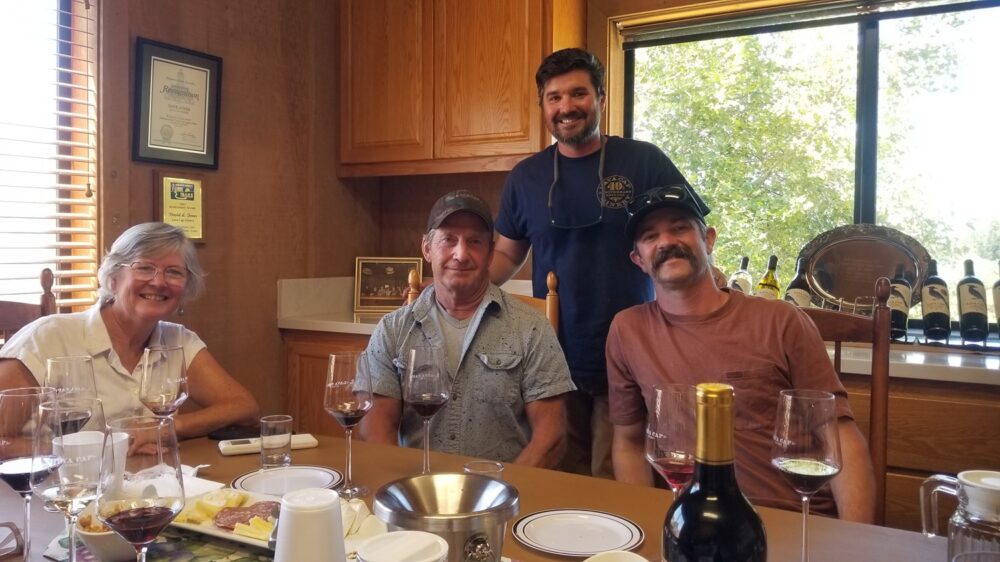
The Jones Family of Lava Cap – Noreen, Charlie, Emmett Walker (standing) and Kevin
The Lava Cap tasting room offers stunning mountain views. Unlike most wineries in California, guests are encouraged to bring their own food to enjoy while picnicking on the rolling lawn behind the tasting room or at one of the tables on their expansive, tree-lined patio. Tastings run $15.00 per person. Although I enjoyed the bright acidity and freshness of all the wines, I’m partial to their excellent 2025 Vermentino ($26.00), elegant 2025 Sauvignon Blanc ($26.00), the stately 2023 Tectonic Zinfandel ($40.00), and the incredibly pretty 2023 Cabernet Franc ($45.00), although their Cabernet Sauvignons are also exceptionally made and priced.
Perhaps the greatest revelation of my trip to El Dorado AVA of the Sierra Highlands occurred on my last day there, at Holly’s Hill Vineyard and Brewery. I’d never been there before, but it came highly recommended, so I made a plan to visit on my way out of town. Before my tasting at Holly’s Hill, I stopped at Bones Roadhouse for what turned out to be an unhealthy but very delicious meal of root beer (free refills!), salty, hot fries and a somewhat greasy and perfect patty melt. Bones Roadhouse is a biker bar at the corner of the country road that leads up to Holly’s Hill. On the way there, families of quail kept darting across the road, making the drive up to the winery somewhat stressful, but pleasantly slow-going.
Co-winemaker and brewer Josh Bendick greeted me as I exited my car. Holly’s Hill was founded by Bendick’s in-laws, Tom and Holly Cooper. Their daughter Carrie, Josh’s wife, is co-winemaker alongside her husband. Bendick’s a man of few words; shy and retiring. Having talked a lot during my visit to the region, it was a welcome change to taste in relative silence, with Bendick offering up occasional bullet points about each wine we tasted but little else. I found the peaceful nature of their tasting room, along with Bendick’s bearing, to be enjoyable and relaxing.
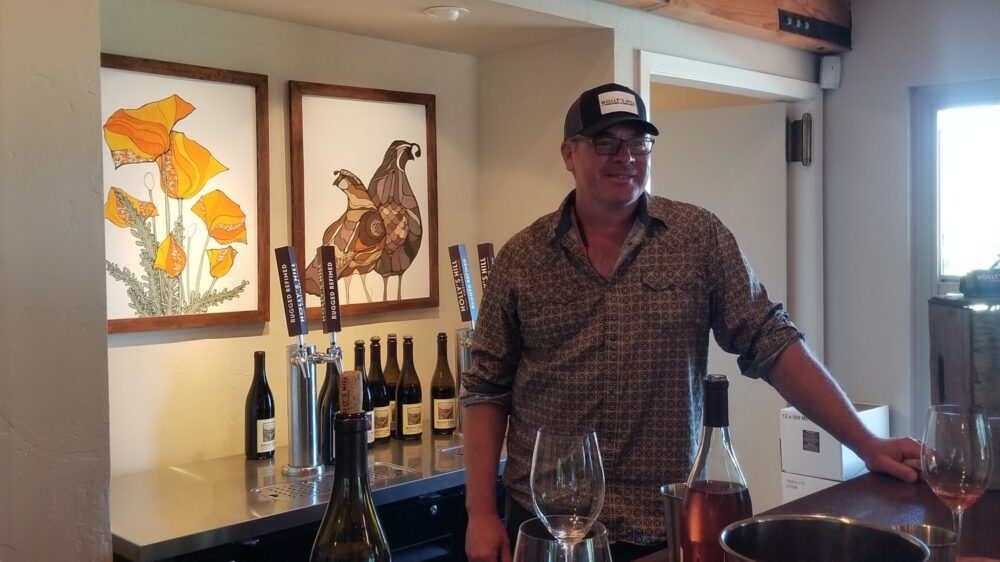
Josh Bendick of Holly’s Hill Vineyards and Brewery
I wasn’t expecting, however, to be utterly blown away by the 2024 Holly’s Hill Syrah from the Fenaughty Vineyard, the second oldest vineyard in El Dorado County. It presented as if it was a cool-climate Syrah, with bright purple fruits, violets, and a distant sanguine echo. I was immediately reminded of the staggeringly beautiful 2006 Arnot-Robers Syrah from Clary Ranch. The 2024 Holly’s Hill Syrah, Fenaughty Vineyard and the Clary Ranch are fine examples of what Syrah is capable of. Not just from the United States, but from anywhere. It also put me in a Cornas state of mind, particularly the wines of Allemand and Clape from the early 1990s, before they got a bit too big and extracted for my personal palate. The 2024 Holly’s Hill Syrah, Fenaughty Vineyard was the wine of the trip for me and one of my top wines of 2026 thus far. Such an ethereal, mysterious beauty.
The concept of terroir doesn’t belong in the halls of wine academia or to wine elitists. Really, it’s a simple and very old concept. If you’ve got a favorite booth at your local farmer’s market that you return to because it offers the best tomatoes from a specific farm in a specific location, tended to by a specific farmer, then you’re already familiar with terroir. What’s exciting about the El Dorado AVA is that their terroir is readily identifiable. Because this small appellation’s wines are not overly stylized or too heavily oaked or manipulated, an overarching regional terroir of Sierra Spice is refreshingly recognizable. If you’re in awe of the natural world and are drawn to collaborations between nature and humans, you may find the terroir of El Dorado AVA – Sierra Spice, volcanic soils, high elevation, the locals – well worth exploring.